

Stay active this winter.
9 Pillars for sustainable movement: -

Winter can challenge even the most dedicated exercisers. The bed feels warmer, the mat feels a little colder, and it's easy to tell yourself you'll get back into moving your body "once it warms up." But the people who stay consistent through winter aren't more disciplined than you — they just have better systems.
Whether your movement of choice is a mat Pilates, a set of squats in the lounge room, or a walk around the block, here's how to build the consistency that keeps you moving all season long.
01 - Set clear intentions

Vague goals like "exercise more this winter" rarely survive the first cold morning. The intentions that actually stick are the ones you can picture yourself doing before you've even rolled out of bed. Get specific, and build the small structures around you that make follow-through automatic rather than something you have to negotiate with yourself every day.
Set a specific intention (e.g. "three Pilates sessions this week") rather than a vague one.
Use visual cues — a sticky note, a calendar on the wall — to keep your goal front of mind.
Track your habits so you can see your consistency building over time
Schedule your sessions like appointments, not "if I get to it" maybes
Set reminders on your phone for the times you're most likely to skip
Prep your workout gear the night before, so you have no excuse to skip it in the morning.
02 - Plan & progress your workouts

Having a goal is one thing — having a plan for how that goal evolves week to week is another.
Without progression built in, routines plateau fast: the same three sessions at the same intensity stop challenging you, and boredom or stagnation quietly does what winter alone couldn't.
A good plan accounts for this in advance, mapping out how your sessions will shift over the coming weeks rather than leaving it to chance.
It also builds in room to scale back without falling off entirely — because a plan that only works when everything goes right isn't much of a plan. If you'd rather not build one from scratch, that's exactly what my Beginner's Daily Workout Planner below is for.
Map out your week ahead of time — which days are Pilates, strength, or a walk if energy is low.
Build in small progressions (an extra round, a longer hold, a heavier household item) rather than repeating the same session indefinitely.
Plan for a lighter version of each session in advance, so a hard week doesn't mean skipping altogether.

Need help staying on track? I’ve created a Beginner’s Daily Workout Planner PDF just for you.
Complete the form below, and I’ll send it to you.
03 - Build effective habits & systems
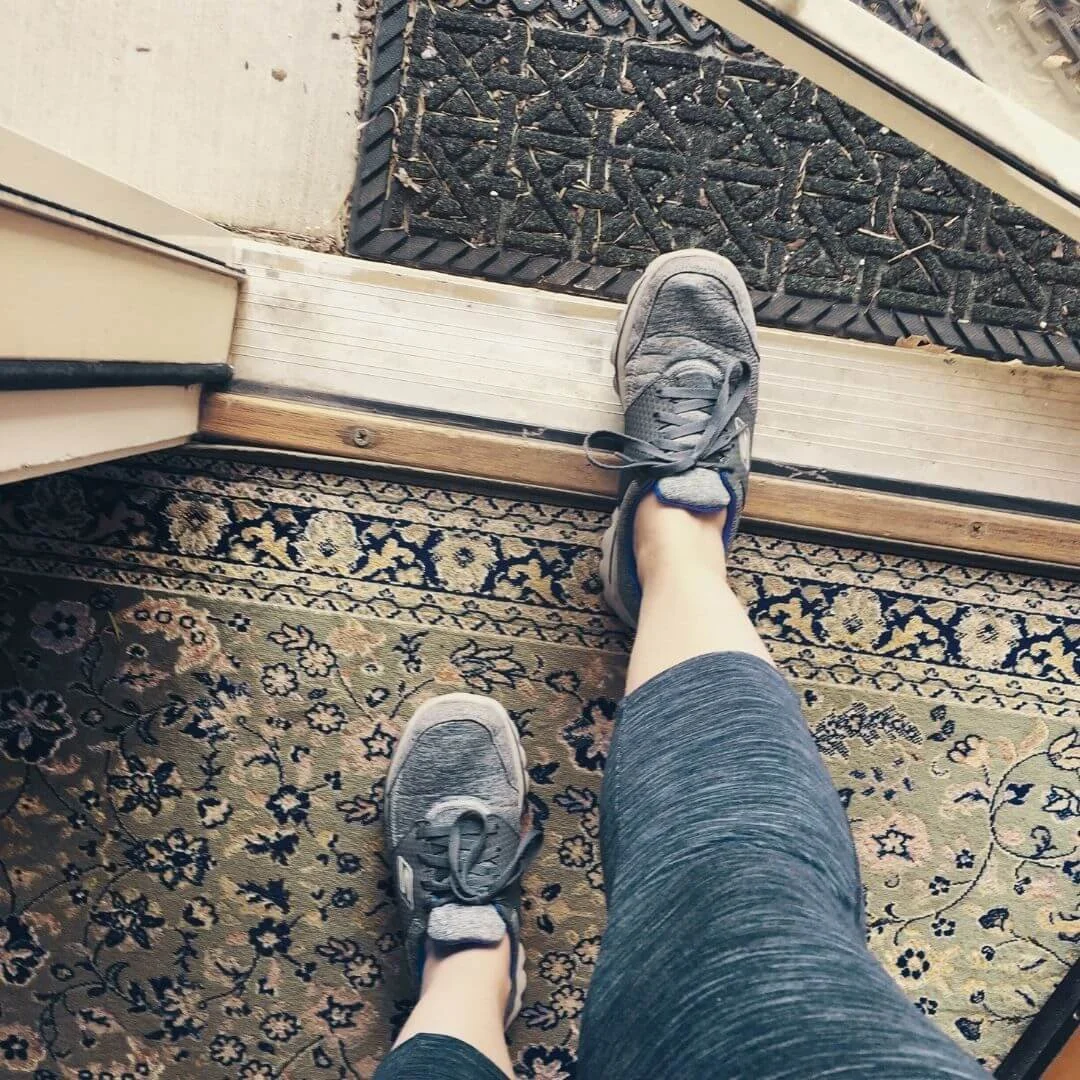
Put on your exercise clothes as soon as possible—once dressed, you’re more likely to get moving. Associate Professor Alderman from Rutgers University notes that it’s hard to take off workout gear without exercising and recommends doing this at least three times a week for three months to build the habit.
Use habit cues, such as putting trainers by the door or workout clothes next to your bed.
Stack exercise onto existing routines (e.g., a short 10-minute walk after lunch while listening to motivational podcasts or audiobooks to make sessions more enjoyable.
Listen to your body and adjust your routine to suit your energy levels and daily schedule.
04 - Create accountability & social support

Motivation is unreliable in winter — it shows up when it wants to, not when you need it.
Accountability, on the other hand, doesn't rely on willpower, and that's exactly why it works when motivation won't.
Find a friend to check in with, join a class where someone will notice if you're not there, or simply tell someone your plan out loud.
There's a reason group fitness and live classes have such staying power compared to solo home workouts: showing up becomes about the people, not just the exercise.
That's the whole idea behind a live-streamed class over a pre-recorded one — someone's actually expecting you, even from your lounge room in your pyjama bottoms.
If you don't have a regular class or workout partner yet, this is the season to find one.
05 - Prioritise mindset & self-talk

Your mindset can make or break your winter fitness routine.
Negative self-talk — "I'll never get back into it" or "it's too cold to bother" — becomes a self-fulfilling prophecy if you let it run the show.
Kaisa Keranen, a well-known fitness influencer, often talks about reframing exercise as something you get to do for your body, not something you have to force yourself through.
Try swapping "I have to work out" for "I get to move my body today," and notice whether that small shift changes how you actually feel about showing up.
Use positive affirmations and visualise your success — read more here.
06 - Prepare for the elements

If you're heading outdoors this winter, a bit of preparation goes a long way toward making sure the cold doesn't win.
But preparation isn't only about gear — it's also about permitting yourself to bring the workout indoors when the weather truly isn't worth battling.
A Pilates mat and a warm room will always beat a freezing wind chill, and there's no medal for suffering through conditions that make you dread the next session.
Layer your clothing so you can adjust as your body warms up.
Invest in a good pair of gloves if your hands go numb easily.
Check the forecast before committing to an outdoor route.
If conditions are genuinely miserable, take it as your cue to move indoors instead.
07 - Make indoor exercise easy
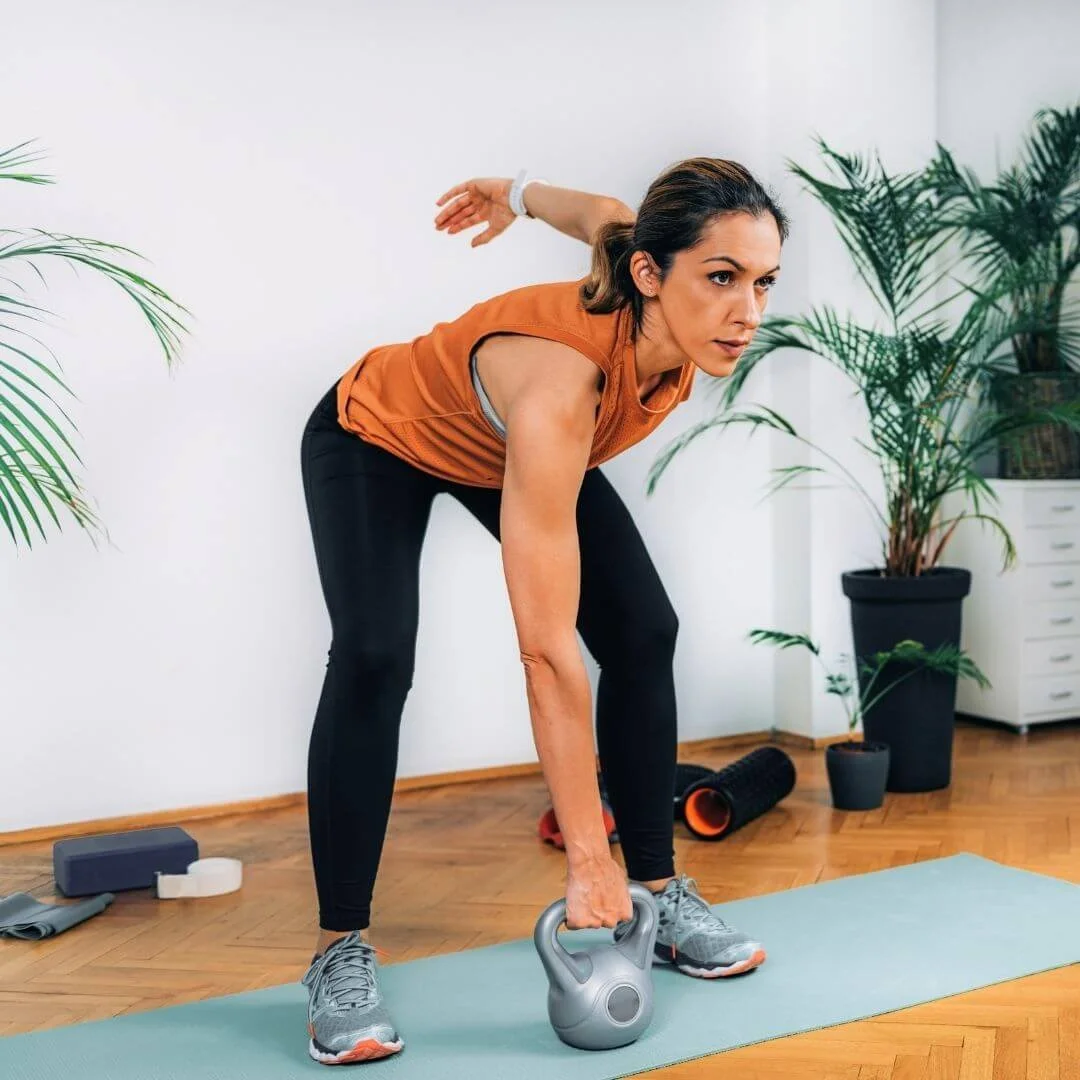
When the weather shuts the door on outdoor movement, the goal is to make it as easy as possible to move indoors instead.
The easier it is to start, the less room there is for winter to talk you out of it.
Use household items (tins, water bottles, a backpack) as makeshift weights.
Clear a small, dedicated space, so you're not setting up a "gym" from scratch each time.
Have a list of home workouts ready for bad weather — I love Nourish, Move, Love's workouts, they have all levels and progressive strength training, or join one of our live-streamed mat classes, no large space needed.
08 - Boost energy & recovery

Winter has a way of draining energy before you've even started moving, which is exactly why recovery matters as much as the workout itself.
Recovery isn't the opposite of progress — it's part of it.
Prioritise sleep — even an extra thirty minutes can change how ready your body feels the next day.
Fuel with warming, nutrient-dense meals rather than skipping food because it's cold.
Use active recovery (a slow Pilates flow, gentle stretching) on rest days rather than sitting fully still.
09 - Reflect, track progress, & reset

Regular reflection helps you stay on track and adapt your plan as the winter weeks go by.
Take time each week to review what’s working and what isn’t—perhaps jot down a few notes after your Sunday workout or during a quiet moment.
Adjust your goals or schedule if you notice your motivation dipping or life gets busy. Flexibility is key to long-term success.
Celebrate your progress—no matter how small—and use any setbacks as learning opportunities, not reasons to give up.
Final thoughts
Winter exercise doesn't have to be a chore. By setting clear intentions, staying positive, planning smartly, and using these practical hacks, you can maintain your fitness and wellbeing all season long — no matter what you choose, whether that's on a Pilates mat, lifting something heavy, or just moving your body indoors on the days you can't face the cold. Pick a few strategies that resonate with you and start today. And if you need the accountability and structure of a class that comes to you, rain, hail, or a Port Macquarie cold front — that's exactly what I'm here for.
“Take care of your body. It’s the only place you have to live.”